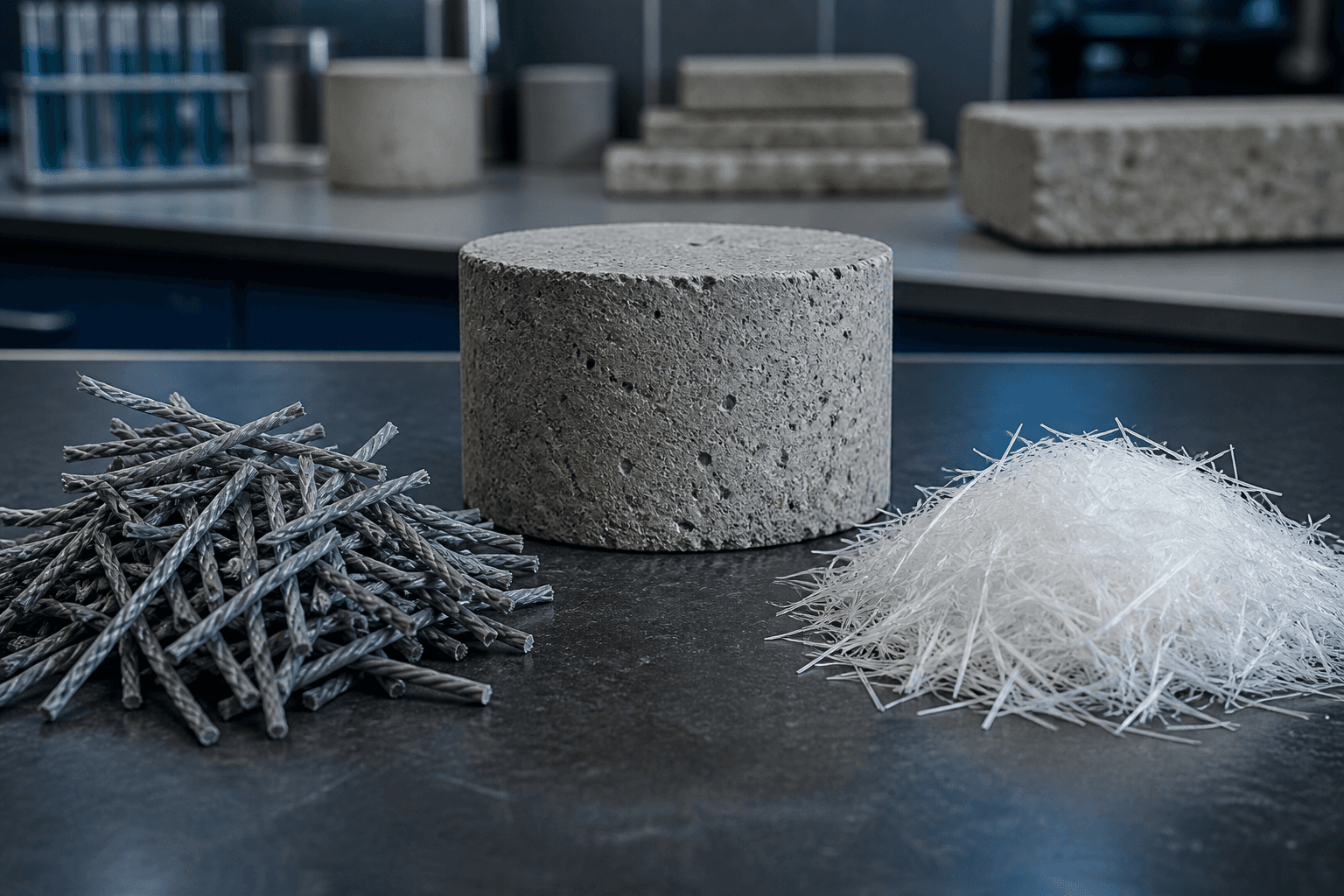


How Is the Right Fiber Dosage Determined for Industrial Floors?
Macro synthetic fiber dosage for industrial floors should not be selected from floor area alone. Ground bearing capacity, slab thickness, concrete strength, moving and permanent loads, joint layout and site conditions must be assessed together. The correct dosage is a key engineering decision for crack control, impact resistance and long-term floor performance.
Why does dosage vary from one project to another?
Warehouses, factories, logistics centres and external yards all operate under different loading scenarios. A yard used by light vehicles cannot be designed in the same way as a warehouse with frequent forklift traffic and concentrated rack loads. Instead of applying one standard rate to every project, the dosage should be supported by calculations and performance checks based on actual service conditions.
Ground and sub-base conditions
The compaction quality and bearing capacity below the slab directly influence stresses in the concrete. A uniform, well-prepared sub-base with adequate capacity helps distribute loads evenly. Weak or variable ground can create differential settlement and local stress concentrations, so ground improvement, sub-base thickness and drainage may also need to be reviewed.
Slab thickness and concrete strength
Slab thickness and concrete class must be considered together with fiber dosage. Thickness influences load-transfer capacity, while concrete properties affect compressive and flexural behaviour. When selecting C25/30, C30/37 or another strength class, exposure conditions, service life and placement method should also be considered. Fiber does not replace a sound concrete design; it works as reinforcement within a suitable slab system.
Forklifts, trucks and concentrated loads
Forklift wheels, truck traffic, machine feet and rack columns create different stress patterns. Vehicle weight is only one input: wheel contact area, axle arrangement, traffic frequency and dynamic effects also matter. Rack post loads and anchor details require attention, while machinery that produces vibration should be assessed separately. Clear loading data produces a more reliable dosage recommendation.
Joint layout and panel geometry
Joint spacing, panel aspect ratio, columns and re-entrant corners are important parts of crack-control design. Irregular panels and excessive joint spacing can increase stress concentrations. Saw-cut timing, depth and location should therefore be planned together with fiber dosage and pour sequencing. This aligns material performance with practical site execution.
Mixing, pumping and finishing
The selected fibers must be distributed uniformly through the concrete. Addition sequence, mixing time, workability and pumping method all affect application quality. Excess water or insufficient mixing can prevent the designed performance from being achieved on site. Trial mixes and clear placement procedures are especially valuable for high-performance floors.
What information is needed for an initial assessment?
A useful preliminary review requires the application area, slab thickness, concrete class, ground condition and expected loads. Structural drawings, geotechnical information, rack layouts, vehicle specifications and a joint plan provide further support when available. These inputs help define a suitable fiber type, preliminary dosage and application approach, with calculations or performance documentation where required.
Conclusion
The right fiber dosage comes from the project’s real operating conditions, not from one fixed number. When material selection, concrete design, load analysis and site execution are considered as one system, industrial floors can achieve better-controlled cracking and a longer service life. Share your project data through our quotation form for a project-specific preliminary assessment.